Recent U.S. and Israeli strikes on Iran—and Tehran’s response—have raised urgent questions about regional stability and the risk of wider conflict. Regional experts examine the situation through a security and strategic lens, focusing on the mechanics of what occurred, the deterrence calculations driving decision-making in Washington, Tel Aviv, Tehran, and the Gulf states, and the potential escalation pathways ahead.
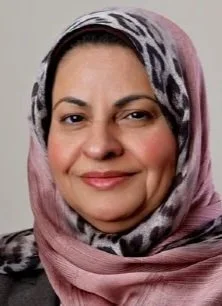
Sara H. Akbar is CEO of Kuwait Energy in Salmiyah, Kuwait. She began her career in 1981 as a petroleum engineer at Kuwait Oil Company, where she later worked in firefighting operations and served as superintendent of petroleum engineering and as an R&D specialist. From 2001 to 2005, she served as new business development manager at Kuwait Foreign Petroleum Exploration Company. Akbar received the United Nations Global 500 Award in 1993 and the SPE Distinguished Member Award in 2003. She most recently received the WOW Awards–Entrepreneurship Award from the New Arab Woman Forum. She has served twice as a director-at-large on the SPE International Board of Directors. She has authored and presented numerous technical papers, spoken at international conferences, and taught at various institutions in Kuwait and abroad. Akbar earned a BS in chemical engineering from Kuwait University and completed additional training in petroleum engineering.
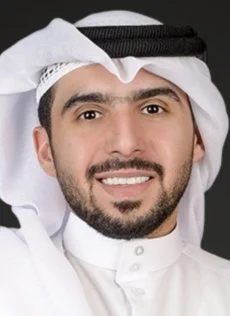
Rashid Al-Mohanadi is a non-resident fellow at the Middle East Council on Global Affairs. He has experience in the defense industry and geopolitical risk advisory. His research focuses on small-state security, defense industry development, regional stability, and strategic affairs, and he regularly contributes to regional and global discussions on security and defense policy. Previously, Mr. Al-Mohanadi worked in the liquefied natural gas (LNG) sector, holding roles across projects, engineering, and commercial sales. He later transitioned to Qatar’s domestic defense industry, contributing to efforts to develop national defense industrial capabilities.
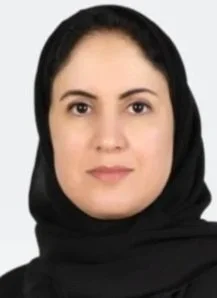
Sheikha Najla Al Qassimi most recently served as Director of the Global Affairs Division at the Dubai Public Policy Research Centre (B’huth). She began her career at the United Arab Emirates Ministry of Foreign Affairs, where she worked as a human rights expert at the UAE Mission to the United Nations in Geneva. She later served as ambassador to several European countries, including Sweden, Denmark, Finland, and Portugal. Prior to joining B’huth, she worked at Zayed University from August 2016 to June 2018 and at the Emirates Center for Strategic Studies and Research. Al Qassimi holds a BA in political science from United Arab Emirates University and an MA in e-Government from Stockholm University.
Dr. Elham Fakhro is a Research Fellow at the Middle East Initiative at the Harvard Kennedy School. She previously held research and teaching roles at Exeter University and NYU Abu Dhabi and served as Senior Analyst for the Gulf States at the International Crisis Group. Her research focuses on Gulf politics, regional security, and Gulf–Israel relations. She is the author of The Abraham Accords: The Gulf States, Israel, and the Limits of Normalization (Columbia University Press, 2024). Fakhro holds an LLM from Harvard Law School and a doctorate (DPhil) from St Antony’s College, Oxford University.
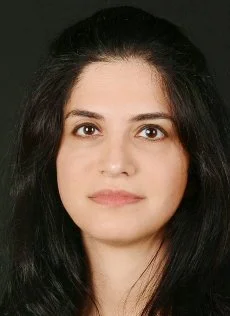
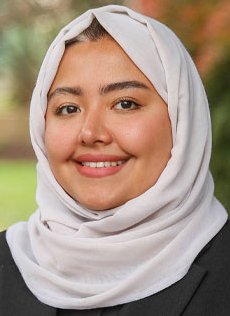
Shahad Turkistani is a PhD candidate at Johns Hopkins University’s School of Advanced International Studies (SAIS), where her research focuses on global energy geopolitics and maritime chokepoints. She is also an energy analyst at the New Lines Institute for Strategy and Policy. In parallel, Shahad serves as a senior research associate at the Edwin O. Reischauer Center for East Asian Studies, examining energy security and sea-lane dynamics between East Asia and the Gulf. She has previously held advisory and research roles in Saudi Arabia and Japan, contributing to regional energy dialogues and policy forums.
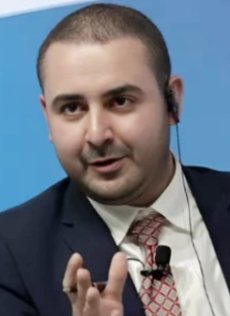
Moderated by Adel Hamaizia, Managing Director of Highbridge Advisory, a strategic boutique firm focused on information advantage, risk mitigation, and policy development for companies and governments operating across the Middle East, the Balkans, and Africa. He is a Senior Advisor at the Milken Institute and a non-resident Senior Fellow at the Atlantic Council’s Middle East programs. He is also a fellow at the Belfer Center’s Middle East Initiative at Harvard Kennedy School and a Senior Visiting Fellow at Harvard’s Public Impact Analytics Lab. Previously, he was an associate fellow with Chatham House’s MENA Programme and Vice-Chair of the Oxford Gulf and Arabian Peninsula Studies Forum (OxGAPS), where he co-founded and co-edited the journal Gulf Affairs. Hamaizia regularly convenes and participates in Track 1.5 and Track 2 dialogues and has provided commentary for outlets including The New York Times, Financial Times, The Economist, Wall Street Journal, Reuters, Arab News, The National, and Al Jazeera.