
Recent U.S. and Israeli strikes on Iran—and Tehran’s response—have raised urgent questions about regional stability and the risk of wider conflict. Regional experts examine the situation through a security and strategic lens, focusing on the mechanics of what occurred, the deterrence calculations driving decision-making in Washington, Tel Aviv, Tehran, and the Gulf states, and the potential escalation pathways ahead.
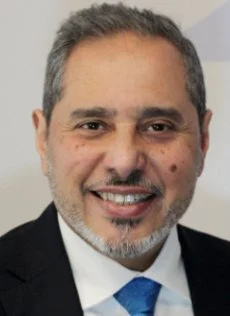
Mohammed Baharoon is Director General of the Dubai Public Policy Research Center (b’huth), a Dubai-based think tank established in 2002. His work focuses on the intersection of geostrategy and policymaking in governance, stability, and capacity building. He previously worked in regional media and served as deputy director of Watani, the UAE’s first national identity initiative. He is also a founding board member of the Bussola Institute in Brussels.
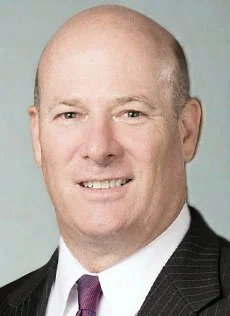
Professor David Des Roches served in multiple roles in the Office of the Secretary of Defense for Policy, including Director for the Gulf and Arabian Peninsula, DoD liaison to the Department of Homeland Security, Senior Country Director for Pakistan, NATO Operations Director, Deputy Director for Peacekeeping, and spokesman for the Defense Security Cooperation Agency. Earlier, he served in the White House Office of National Drug Control Policy. He has lectured at the Qatari Staff College, the Saudi War College, and Sciences Po, and writes and speaks widely on Gulf and Middle East security.
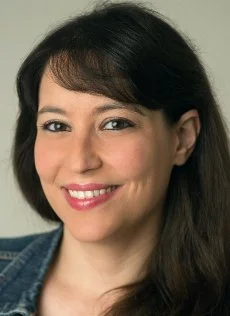
Dr. Or (Ori) Rabinowitz is a tenured senior lecturer at the International Relations Department of the Hebrew University and a visiting associate professor of Israel studies at Stanford from 2024 to 2026. She received her PhD from King’s College London, where she received the prestigious Chevening scholarship, awarded by the British Foreign Office. She researches nuclear proliferation, intelligence studies, and US-Israel relations.
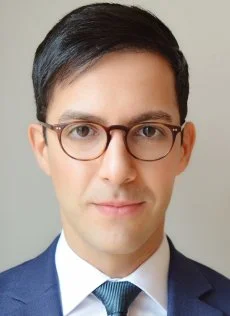
Dr. Ali Vaez is Iran Project Director and senior adviser to the president at the International Crisis Group. He previously served at the United Nations Department of Political and Peacebuilding Affairs and led Crisis Group’s efforts to help bridge gaps between Iran and the P5+1 during negotiations that produced the 2015 nuclear deal. Vaez is an adjunct professor at Georgetown University’s School of Foreign Service and a fellow at Johns Hopkins SAIS. He holds a PhD from the University of Geneva and has written widely on Iranian affairs for major outlets including The New York Times, The Washington Post, and Foreign Affairs.
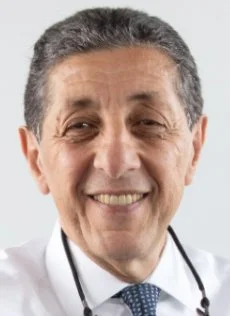
Moderated by Ambassador Hesham Youssef, a retired career diplomat with the Ministry of Foreign Affairs of Egypt and is currently a senior advisor at the European Institute of Peace. He was assistant secretary general for Humanitarian, Cultural and Social Affairs of the Organization of Islamic Cooperation and served in the Arab League for 14 years in multiple positions, including official spokesman and chief of staff to Amre Moussa and senior advisor to Nabil Elaraby. He has worked extensively on conflict resolution in the Middle East, particularly on the Arab-Israeli conflict, Iraq and Sudan. He has written several papers on reform in the Arab world and focused on fragility and the humanitarian situation in the Islamic world. He holds a Master's in economics and a second Master's in philosophy.